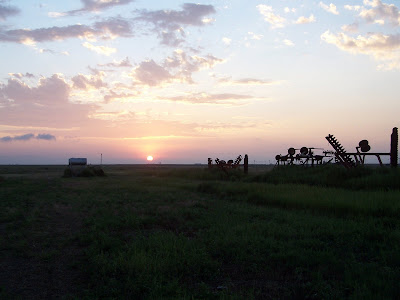
To top it off the author, Jim Atkinson (A New Yorker I presume) described the city and area far more articulately than I ever could. He even trumped me by mentioning my subject matter for this week's post. Seriously, if you get the chance read the article, and check out the accompanying slide show of pictures as both are more interesting than my post this week. My only disagreement would be with Mr. Atkinson's choice of Mexican restaurant and the snubbing of my expertise on the Amarillo and the Panhandle region. Okay, so I'm just some writer/blogging hack nobody but y'all have ever heard of, but that's beside the point.
***************************
Now to this week's post.
It's colorless. Odorless. Tasteless. And non-toxic. (No, I'm not talking about my cooking.)
It's atomic number is 2. It's boiling and melting point are among the lowest of all elements. It is nearly always a gas. It is the king of the so-called noble gases.
It has served admirably in war time.
It has the power to change your voice.
It is helium and 95% of the world's supply is found within a 250 mile radius of Amarillo earning the city the nickname of "Helium Capital of the World."
Helium was discovered in 1868 and in 1903 it was learned that huge amounts of the element were present in the natural gas fields around Amarillo.
In 1925, the U.S. government established the National Helium Reserve at Amarillo with the goal of supplying the military in times of war, and commercial airships in times of peace. Due to an embargo against Germany that restricted helium supplies, the Hindenburg was forced to use hydrogen as the lift gas. Helium has a far greater stability so history could have been changed without the embargo.
Throughout the 1940’s the Amarillo Helium plant’s produced 24 million cubic feet annually, though President Franklin D. Roosevelt wanted to up production to 150 million cubic feet for the construction of 200 lighter-than-air aircraft for the Navy. In response, Congress approved nearly $17 million to expand the federal helium operations. In order to satisfy the 150 mmcf annual production quota, the federal workforce increased from 36 employees at the Amarillo Plant, to more than 400 men and women working at five separate plants.
The U.S. Bureau of Land Management still operates north of Amarillo, and about 40 percent of U.S. helium production - and almost 35 percent of the world's helium production comes from the Amarillo operations, but in 2006 the General Services Administration declared the old Amarillo Helium Plant on the west side of town as surplus government property because of "excessive deterioration." It was auctioned off and is now in the hands of private owner, but the building stand as a ghostly reminder of a bygone time.

So think of Amarillo the next time you're at a birthday party and somebody huffs a bit of helium and does their best Alvin and the Chipmunks impersonation.
The city has a National Helium Monument, but I did not make it out for a picture, but I plan to include it in a future post anyway.
Links to other MY TOWN MONDAYERS
Lana Gramlich --A look at Abita Springs, Louisiana's visit from Gustav.
Linda McLaughlin -- Digs up some dormant memories about the Pittsburgh, Pennsylvania area.
Debra -- Go on a stroll with her through Peninsula, Ohio
Britta Coleman -- Basks in the glow of that silver star in Fort Worth, Texas.
Terrie Farley Moran -- Wants him buried in the Bronx, New York.
Lyzzydee -- Takes us on vacation with her to Kinderdijk, Holland.
Barbara Martin -- Uncovers history and heroes in Toronto, Canada
Joshua -- Spices up Columbia, Illinois.
Barrie Summy -- Feeds us in the Little India, section of Toronto, Canada
Patti Abbott -- The ugly side of politics in Detroit, Michigan.
Mary Nix -- Working on the railroad in Olmsted Falls, Ohio
Clair Dickson -- Goes looking for the trains of yesteryear in Livingston County, Michigan
David Cranmer -- Introduces us to the Kom people of Cameroon in West Africa.
J.L. Krueger -- Gives us more insight into the people and culture of Kabul, Afghanistan.